

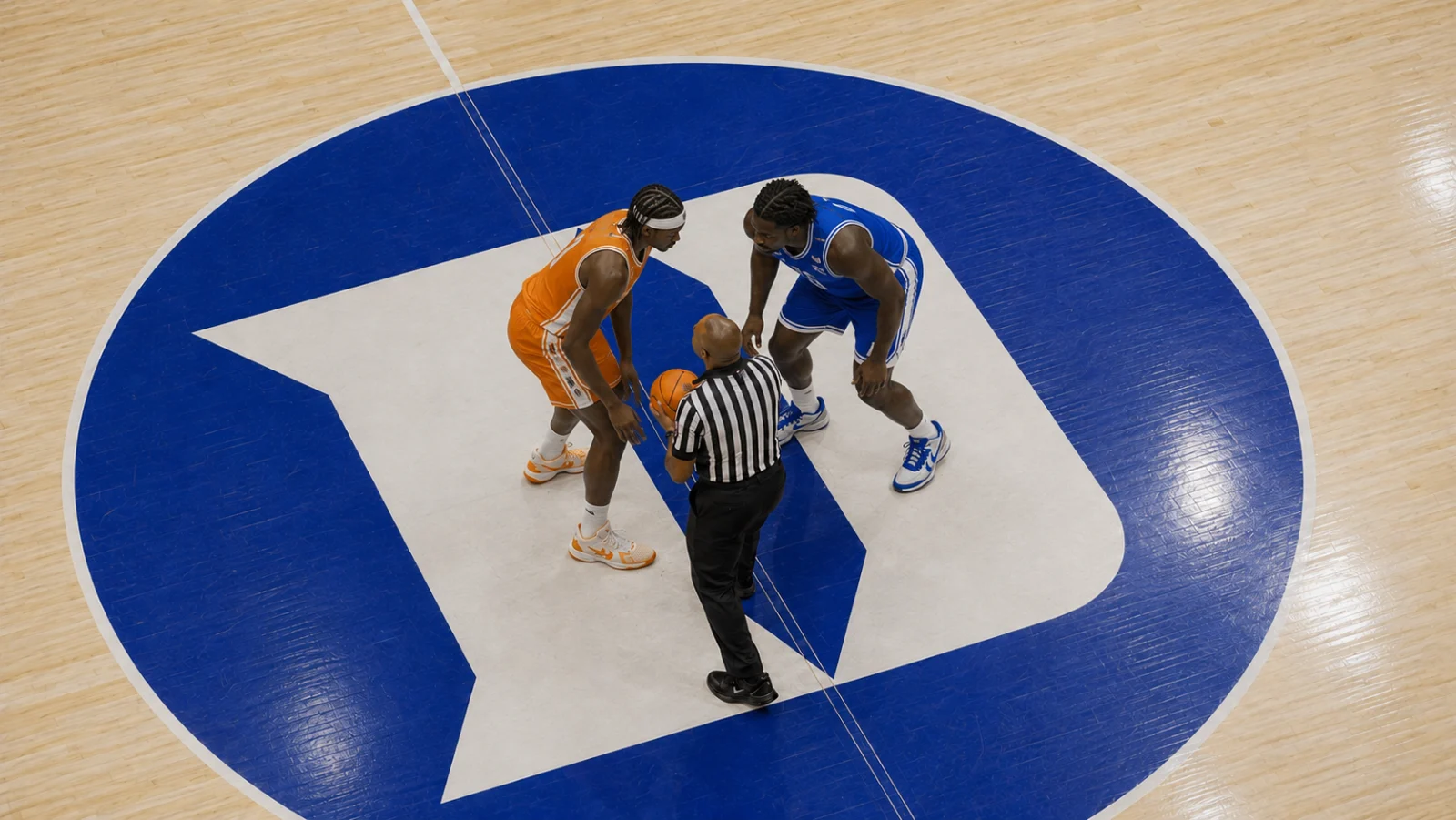
Tennessee will not ease its retooled basketball team into the 2026-27 season. Instead, the Vols will walk into Cameron Indoor Stadium on Oct. 20 and measure themselves against Duke before their first official game is played.
It is precisely the kind of preseason test Tennessee needs.
The Blue Devils have assembled another roster carrying legitimate Final Four expectations, combining an accomplished returning nucleus with three transfers and the nation’s second-ranked recruiting class. Duke returns four of its top six scorers from a 35-win team, giving Jon Scheyer considerably more continuity than Rick Barnes will have as Tennessee works a collection of newcomers into meaningful roles.
Tennessee could have chosen a comfortable exhibition opponent and used the night to distribute minutes, experiment with combinations and manufacture a lopsided result. Barnes has long preferred something more revealing.
“We are confident this matchup will benefit both teams and really help prepare us for the upcoming season,” Barnes said when the first Tennessee-Duke exhibition was announced last summer.
One year later, the same logic applies even more forcefully.
The Vols will arrive in Durham with a roster reshaped around newcomers such as coveted transfer Juke Harris, Jalen Haralson, Terrence Hill Jr., Dai Dai Ames, Tyler Lundblade and Miles Rubin. Talented freshmen Ralph Scott and Marquis Clark are also entering a program that has reached three consecutive Elite Eights but must again establish its identity with a substantially different cast.
Cameron Indoor is no place for a team still in search of an identity.
That is precisely what makes the matchup so valuable. Tennessee will encounter elite talent, veteran players and one of the most unforgiving road environments in college basketball, all without an official loss being attached to whatever weaknesses Duke exposes.
Barnes and his staff should learn more from 40 minutes in Durham than they could from several exhibitions against overmatched competition. The Vols will find out which guards can organize the offense under pressure, whether their new rotation can rebound against high-level size and which players remain dependable when communication becomes difficult.
They may also discover that this group is ready earlier than expected. An impressive showing would not establish Tennessee as a finished product, and an exhibition victory would carry no weight in March. It could, however, provide the first evidence that Barnes has successfully connected another rebuilt roster—and give the Vols an opportunity to introduce themselves nationally before the season begins.
The matchup also comes with some unfinished business.
Duke defeated Tennessee 83-76 last October before a sold-out crowd at Food City Center. The Vols led 43-37 at halftime and had been ahead by nine late in the opening period, only to surrender a 23-9 Duke surge after the break.
Cameron Boozer overwhelmed Tennessee with 24 points, 23 rebounds and six assists. Duke controlled the glass 48-39, collected 16 offensive rebounds and made all 20 of its second-half free throws while Tennessee went more than seven minutes without a field goal late in the game.
“That was everything we could ask for, and more,” Scheyer said afterward, describing the demanding environment Tennessee provided for his team.
Now the venues—and the opportunity—will be reversed.
Many of the players responsible for last year’s result have moved on, particularly on Tennessee’s side. That keeps this from being revenge in the traditional sense, but programs remember these encounters even when the participants change.
Duke came to Knoxville, absorbed Tennessee’s early pressure and left with a victory. The Vols will now have an opportunity to return the favor on the Blue Devils’ floor, where Tennessee has not played since an 86-80 victory on Dec. 3, 1975.
There is also more connecting these programs than one October rematch. Tennessee and Duke are the only two teams in the country to have reached the Elite Eight in each of the past three seasons, placing this exhibition between two programs that have repeatedly played deep into March.
Tennessee has embraced this level of preseason competition under Barnes. The Vols defeated No. 2 Gonzaga 99-80 in a 2022 exhibition and won 89-88 at No. 4 Michigan State the following year, experiences that supplied an immediate test of teams that ultimately became national contenders.
Duke represents the next version of that challenge, only this Tennessee team may need the confrontation more than most. With new scorers, new playmakers and new defensive responsibilities throughout the rotation, the Vols cannot afford to spend November discovering who they are.
They will receive some answers on Oct. 20.
The result will disappear from the record once the regular season begins. What Tennessee reveals about itself at Cameron Indoor—and what it learns while trying to settle last October’s score—could last considerably longer.
– Vol Hoops Staff Writer