

Rick Barnes has built enough successful teams to know that championships aren’t won by one coach standing alone.
Every March run, every defensive breakthrough and every player who develops into something more than expected has been shaped by an entire staff working behind the scenes. That’s why one of Tennessee’s most significant offseason additions may not have been a transfer portal commitment at all. It may have been the arrival of veteran assistant Earl Grant.
While most of the offseason conversation has centered on new players, Grant has quietly settled into Knoxville after spending more than a decade leading his own Division I programs. His résumé includes successful stops as the head coach at Charleston and Boston College, where he built a reputation as a teacher, program builder and relentless developer of talent. Choosing to step away from the head chair surprised many around college basketball. For Grant, however, the decision wasn’t about taking a step backward.
“I was looking for an assignment,” Grant said after joining Tennessee. “When Coach Barnes called me… it just felt like a perfect assignment for me.”
That word—assignment—says a great deal about how Grant approaches coaching.
Rather than speaking about prestige or career advancement, Grant has consistently emphasized service, relationships and growth. It’s a mindset that mirrors the culture Barnes has spent a decade building inside Tennessee’s program, where player development and daily accountability are valued just as highly as wins and losses.
“I’m extremely excited about the opportunity to serve, learn and grow at Tennessee,” Grant said shortly after arriving in Knoxville.
Barnes believes Grant’s impact will extend far beyond another experienced voice on the practice floor.
“Earl Grant is a perfect fit for Tennessee basketball,” Barnes said when announcing the hire. “I love his coaching philosophies… Earl is a man of impeccable character and I am certain he will make a positive impact on the players in our program.”
Those aren’t the kinds of compliments Barnes hands out casually.
Grant arrives with the perspective of someone who has spent years making the difficult decisions that come with running an entire program. Recruiting, roster management, player development and game preparation have all crossed his desk as a head coach. That experience gives Tennessee’s staff another veteran voice capable of seeing the game through a broader lens while still diving into the daily details that shape winning basketball.
That influence is already becoming noticeable.
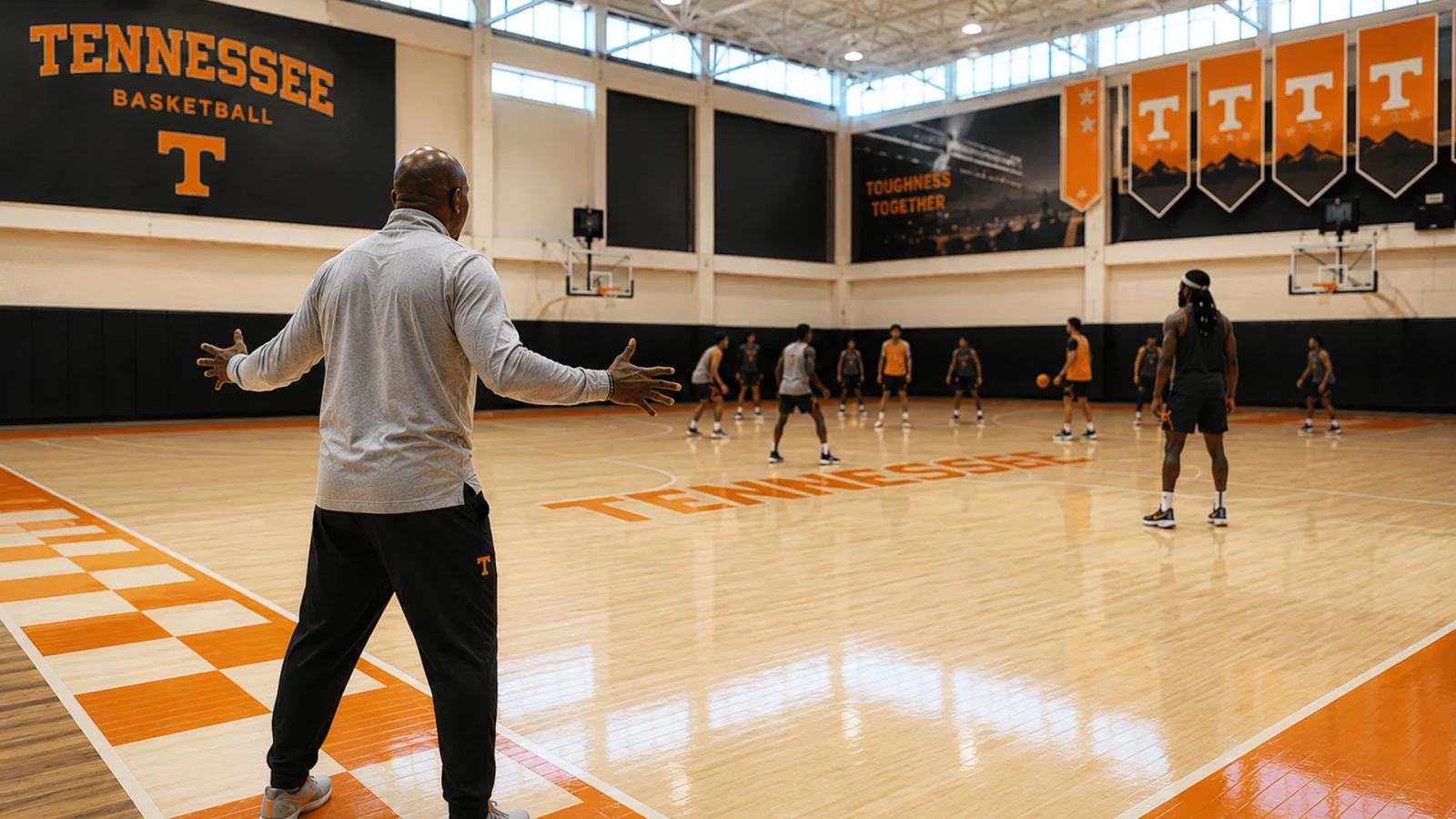
Reporters attending Tennessee’s first open summer practice repeatedly observed Grant’s constant interaction with players. Whether teaching positioning, offering encouragement or stopping to explain a detail, he carried himself less like a newcomer learning the program and more like another extension of Barnes’ philosophy. His calm demeanor and measured teaching style stood out throughout the workout.
Of course, assistant coaches rarely make headlines during the season. Fans naturally focus on the players making shots or the head coach drawing up late-game plays. Yet those inside successful programs often point to the countless teaching moments that happen long before tipoff—the conversations after practice, the individual workouts, the subtle corrections that gradually become winning habits.
That’s where Grant may ultimately leave his biggest mark.
Tennessee’s roster has changed dramatically this offseason, bringing together new personalities, new skill sets and new expectations. Helping that group become a connected basketball team won’t happen by accident. It will require experienced teachers who understand both the technical side of the game and the human side of leading young players.
Rick Barnes didn’t simply add another assistant to his bench this spring. He added another experienced head coach.
By the time March arrives, Vol fans may discover that was one of the most important offseason additions Tennessee made.
– Vol Hoops Staff Writer